Introduction
In the party supplies and costume wholesale industry, shipping disputes are often treated as unavoidable risks. Many buyers assume that missing items, incorrect quantities, damaged cartons, or documentation discrepancies are simply part of doing business across borders. In reality, most shipping disputes are not accidents. They are predictable outcomes of weak systems, unclear responsibilities, and insufficient process control at the supplier level.
Professional costume manufacturers view shipping disputes very differently. Instead of reacting to problems after goods arrive at the destination warehouse, they focus on preventing disputes before shipment ever takes place. This prevention mindset is what separates professional manufacturers from ordinary factories or trading intermediaries.
Costume and party supplies orders are especially vulnerable to disputes because they are usually multi-SKU, size-sensitive, seasonal, and time-critical. A single shipment may contain dozens of designs, multiple sizes, mixed carton configurations, and packaging variations. Without strict coordination between order confirmation, production, packing, and logistics, disputes become statistically inevitable.
This article explains what buyers should realistically expect from professional costume manufacturers to prevent shipping disputes before they happen. It is written for buyers sourcing party supplies and costumes at scale, who care not only about price, but about long-term stability, predictability, and risk control.

Why Shipping Disputes Are Common in Costume and Party Supplies Wholesale
Before discussing prevention, it is important to understand why shipping disputes occur so frequently in this industry.
Structural Complexity of Costume Orders.
Costume wholesale orders typically include:
- Multiple costume designs or characters
- Size variations for each design
- Gender-based differences
- Accessories or bundled items
- Seasonal packaging requirements
Each additional variable increases the risk of error. When suppliers lack standardized systems, these variables quickly lead to miscounts, incorrect packing, or documentation mistakes.
Time Pressure and Seasonality
Unlike many general consumer products, costumes are strongly seasonal. Halloween, Christmas, carnival events, and themed festivals create intense production and shipping pressure within short timeframes. Under pressure, suppliers without professional systems often prioritize speed over accuracy, which directly leads to disputes.
Lack of Accountability Systems
In non-professional factories, responsibilities are often vague. Packing staff, warehouse teams, and logistics coordinators operate independently without clear checkpoints. When a problem occurs, no one can clearly trace where the error happened.
Professional costume manufacturers design their systems specifically to address these risks.
What Defines a Professional Costume Manufacturer
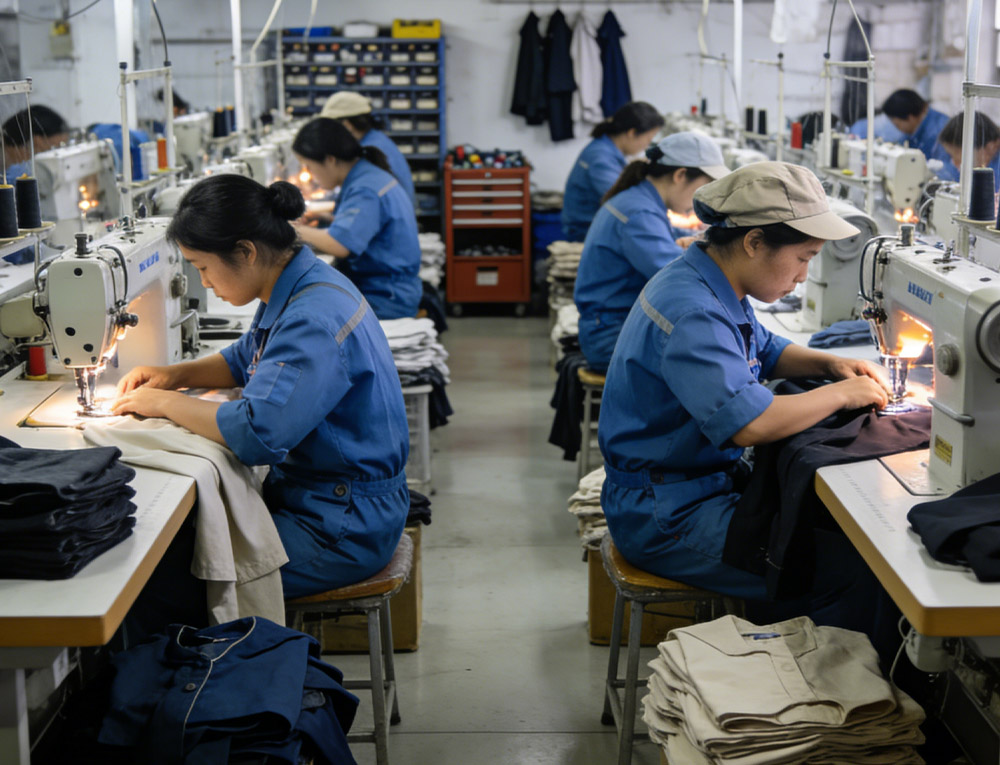
Not every factory that produces costumes qualifies as a professional costume manufacturer. From a buyer’s perspective, professionalism is not about marketing claims, but about operational behavior.
Core Characteristics Buyers Should Look For
Professional costume manufacturers consistently demonstrate:
- Clear internal standard operating procedures (SOPs)
- SKU-level order confirmation and tracking
- Documented packing and verification processes
- Pre-shipment quantity control mechanisms
- Structured claim-handling workflows
They do not rely on memory, verbal instructions, or “experience alone.” Instead, they rely on repeatable systems that work even under pressure.
Clear Order Structuring Before Production Starts
Why Order Clarity Is the First Line of Defense
Many shipping disputes originate from unclear or incomplete orders. If production starts based on vague instructions, no amount of inspection later can fully eliminate risk.
Professional costume manufacturers insist on order clarity before production begins.
What Buyers Should Receive at the Order Confirmation Stage
A properly structured order confirmation should include:
- SKU-level breakdown of every costume
- Clear size and variation separation
- Confirmed quantities per SKU
- Defined packing logic (assorted or single-SKU cartons)
Example Order Breakdown Table
| SKU Code | Costume Name | Size | Quantity |
|---|---|---|---|
| CS-301 | Vampire Costume | M | 600 |
| CS-301 | Vampire Costume | L | 400 |
| CS-415 | Witch Costume | S | 300 |
| CS-415 | Witch Costume | M | 300 |
This level of detail ensures that production, packing, and warehouse teams work from the same reference point.
Standardized Packing Systems for Mixed-SKU Shipments
Why Mixed-SKU Packing Creates High Risk
In costume wholesale, mixed-SKU cartons are common due to freight optimization. However, without strict packing standards, mixed cartons are one of the leading causes of missing-item disputes.
What Professional Costume Manufacturers Implement
Professional manufacturers establish:
- Fixed packing ratios per SKU
- Written packing instructions used on the production floor
- Mandatory carton labeling standards
- Packing checklists signed off by supervisors
Example Packing Configuration
| Carton Number | Contents | Quantity |
|---|---|---|
| CT-01 | Vampire M / L | 50 / 50 |
| CT-02 | Witch S | 100 |
This system allows both buyers and suppliers to verify shipments carton by carton if a dispute occurs.
Pre-Shipment Quantity Verification and Internal Quality Control
Why Final Counting Matters More Than Visual Inspection
Costumes are soft goods. They can be compressed, folded, or vacuum-packed, making visual estimation unreliable. Relying on carton volume alone is a common mistake in non-professional factories.
Professional Verification Practices
Before shipment, professional costume manufacturers conduct:
- Final item counts after packing is completed
- Cross-checks between production output and packed quantities
- Internal QC sign-off before warehouse release
These steps are not symbolic. They directly reduce the likelihood of shortages reaching the buyer’s warehouse.
Visual Packing Evidence as a Dispute-Prevention Tool
Why Evidence Is Critical in International Trade
When disputes arise, verbal explanations rarely resolve them. Evidence does.
Professional costume manufacturers increasingly treat visual documentation as a standard risk-control tool, especially for complex or high-value shipments.
Common Types of Visual Evidence
Packing photos showing SKU separation
Carton-level images with labels and quantities
Short videos of packing or carton sealing
Image Example
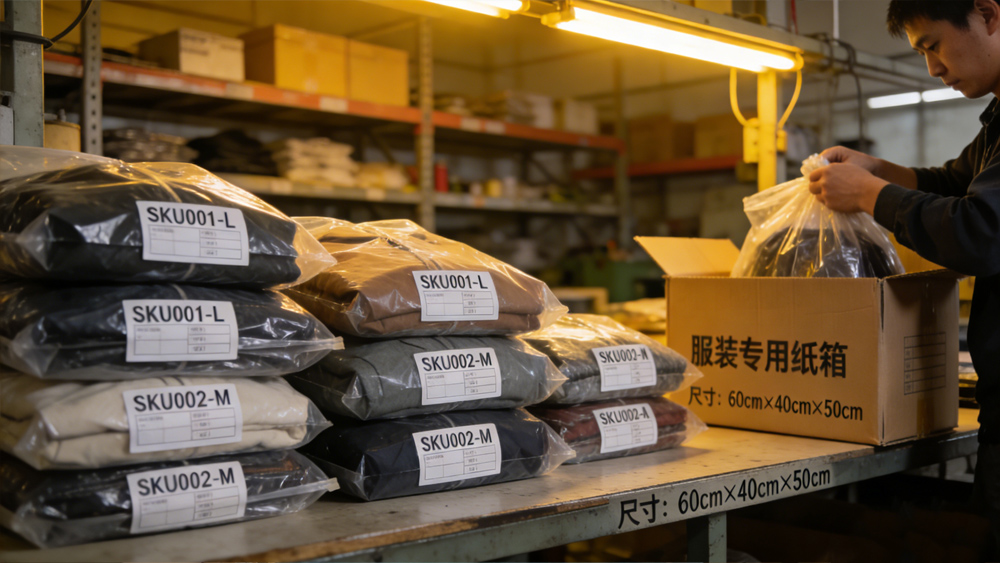
Visual evidence significantly shortens dispute resolution time and protects both parties from false claims.
Accurate and Consistent Shipping Documentation
Even when goods are packed correctly, documentation errors can trigger disputes.
Documents That Must Remain Consistent
Professional manufacturers ensure alignment across:
- Packing List
- Commercial Invoice
- Bill of Lading
- Carton markings
SKU names, quantities, and carton counts must match exactly. Version control is essential when revisions occur.
Defining Responsibility Through Incoterms and Contracts
Why Responsibility Must Be Clear Before Shipping
Shipping disputes escalate rapidly when responsibility is unclear or disputed.
Professional costume manufacturers clarify:
- Incoterms (EXW, FOB, CIF, DDP)
- Risk transfer points
- Insurance coverage responsibilities
Practical Impact on Dispute Handling
- EXW: Buyer assumes responsibility early and must inspect carefully
- FOB: Supplier is responsible until goods are loaded
- CIF: Supplier arranges insurance and supports claims
- DDP: Supplier controls the full logistics chain
Clear definitions turn disputes into procedural issues rather than emotional conflicts.
Coordination With Freight Forwarders and Third Parties
Professional costume manufacturers maintain stable relationships with:
- Freight forwarders
- Warehouse operators
- Third-party inspection agencies
They provide loading photos, handover records, and cooperate fully during investigations. This transparency accelerates dispute resolution.
How Professional Costume Manufacturers Handle Claims Internally
Structured Claim-Handling Workflow
When a buyer files a claim, professional manufacturers follow a defined process:
- Review packing and QC records
- Verify warehouse dispatch data
- Compare shipment weights and carton counts
- Coordinate with freight forwarders
- Issue written findings and solutions
This structure ensures consistency and fairness.
Professional vs Non-Professional Response Comparison
| Aspect | Non-Professional Supplier | Professional Manufacturer |
|---|---|---|
| Evidence | Verbal explanations | Documented records |
| Speed | Inconsistent | Structured and predictable |
| Resolution | Ad-hoc promises | Contract-based solutions |
Realistic Resolution Options That Protect Long-Term Cooperation
Professional costume manufacturers do not overpromise. Typical solutions include:
- Replacement shipments
- Credit notes for future orders
- Insurance claim assistance
- Partial refunds where appropriate
Suppliers who promise instant compensation without investigation often lack internal controls.
Long-Term Documentation and Continuous Improvement
Professional manufacturers track:
- Order history by buyer
- Frequency and type of disputes
- Repeated SKU or packing issues
This data allows continuous system improvement and reduces future risks.
Managing Risk During Seasonal Costume Orders
Seasonal orders carry higher risk due to volume spikes and tight deadlines.
Professional manufacturers respond by:
- Increasing QC frequency
- Adding verification checkpoints
- Assigning experienced staff to packing
Buyers should expect stricter controls—not excuses—during peak seasons.
What Buyers Should Ask Before Placing the First Order
Before committing to a supplier, buyers should ask:
- How are mixed-SKU orders packed and verified?
- What visual packing evidence is available?
- How are missing-item claims investigated?
- How are disputes documented and resolved?
The answers reveal the supplier’s true level of professionalism.
Why Professional Manufacturers Design Dispute-Prevention Systems
Professional costume manufacturers assume that errors can happen. Instead of denying this reality, they design systems to manage it.
Key Design Principles
- Redundant verification at critical stages
- Clear responsibility mapping
- Mandatory documentation
These systems make disputes traceable, controlled, and fair.
Strategic Value for Buyers
Working with manufacturers who prioritize dispute prevention offers:
- Fewer recurring issues
- Faster resolutions
- Higher predictability
- Lower hidden operational costs
Over time, these benefits outweigh small price differences.
Final Thoughts
Shipping disputes in the costume and party supplies industry are rarely random. They are usually the result of weak systems, unclear responsibilities, or insufficient process control.
Professional costume manufacturers prevent disputes by structuring orders clearly, verifying quantities rigorously, documenting every critical step, and handling claims through defined systems.
For buyers, knowing what to expect—and what to require—from professional costume manufacturers is one of the most effective ways to protect inventory, timelines, and long-term sourcing relationships.