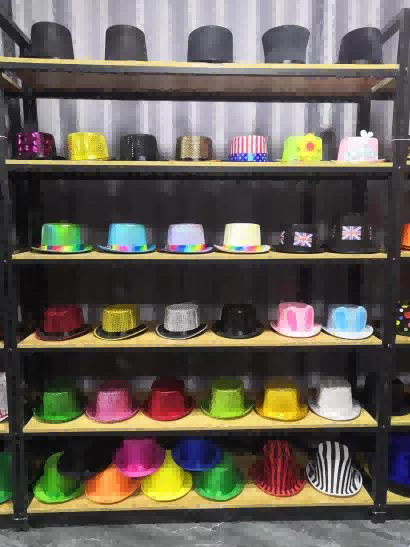
If your team already has an Oktoberfest costume concept, the sourcing challenge is not inspiration. It is translation: turning a sketch, sample or reference image into a product with defined materials, workable sizing, coordinated components and production-ready specifications.
Two costumes can look almost identical online and still have very different cost and production requirements. One may be a single-layer textile garment. Another may include lining, embroidery, custom buckles, a separate shirt, an apron and a hat. A large order may look attractive at programme level but become difficult once it is divided across several styles and three to six sizes per style.
For costume brands, wholesalers and importers, choosing an Oktoberfest costume supplier therefore takes more than comparing product photos and headline prices. You need to know what each quote covers, how the size split will be handled and whether the approved sample can be repeated in bulk.
Match the Supplier to the Job
The word "supplier" covers several business models.
A ready-stock wholesaler is useful when you need to replenish an existing SKU quickly, but it normally offers limited control over fabric, sizing and packaging. A traditional Tracht supplier serves a different market-one that values traditional materials, construction and cultural positioning. A custom party costume manufacturer is the better fit when your team has a design direction and needs it converted into a sample and a bulk order.
Fcostume specialises in buyer-led custom textile party costume programmes. Starting with your tech pack, reference sample, drawing or defined requirements, Fcostume coordinates the garment construction, size development, related headwear and accessories, labels and packaging needed to move the product towards production.
That specialisation changes the conversation. Instead of asking only, "Which styles do you have?", your team can ask how the supplier will build your product, control the components and organise the order.
Define the Product Before Requesting a Quote
A reference image communicates a look. It does not tell the supplier enough to quote the same product that your team has in mind.
Before requesting a price, define:
- the destination market and sales channel;
- whether the product is for adults or children;
- whether it is a single garment, a complete set or part of a group programme;
- whether the intended product is a textile party costume or a traditionally positioned garment;
- whether development will start from a tech pack, drawing, physical sample or reference image;
- estimated quantities by style, colour and size;
- which shirts, aprons, waistcoats, suspenders, hats or accessories belong in the set;
- hangtag, care label, barcode, retail packaging and carton requirements;
- the sample-approval date and required delivery date.
Without that information, every supplier makes different assumptions. One may quote a dress only; another may include the blouse and apron. One may assume a lightweight fabric; another may allow for lining and structured panels. The numbers are not comparable until the product definition is comparable.
Get the Product Language Right
Terminology shapes what the buyer, supplier and end customer expect. Four descriptions that often appear around this category carry different meanings.
Authentic Bavarian Tracht suggests traditional Bavarian dress and makes a claim about cultural authenticity. Traditional German clothing is a broader category, but it still implies more than a costume that simply borrows a familiar silhouette. Genuine leather Lederhosen is a material claim: the product must actually be made from leather, with product information to support that description.
Lederhosen-style costume is the clearer term for a party costume that draws on the visual features of Lederhosen but is made mainly from textile fabrics. That is the appropriate product language for Fcostume’s textile-based projects.
The name still needs a specification behind it. State the shell fabric, contrast panels, lining, decoration, suspenders, buckles and included accessories. Precise language helps prevent a gap between the customer’s expectations and the delivered item-and gives suppliers a common basis for quoting.
What Actually Drives the Cost of an Oktoberfest Costume?
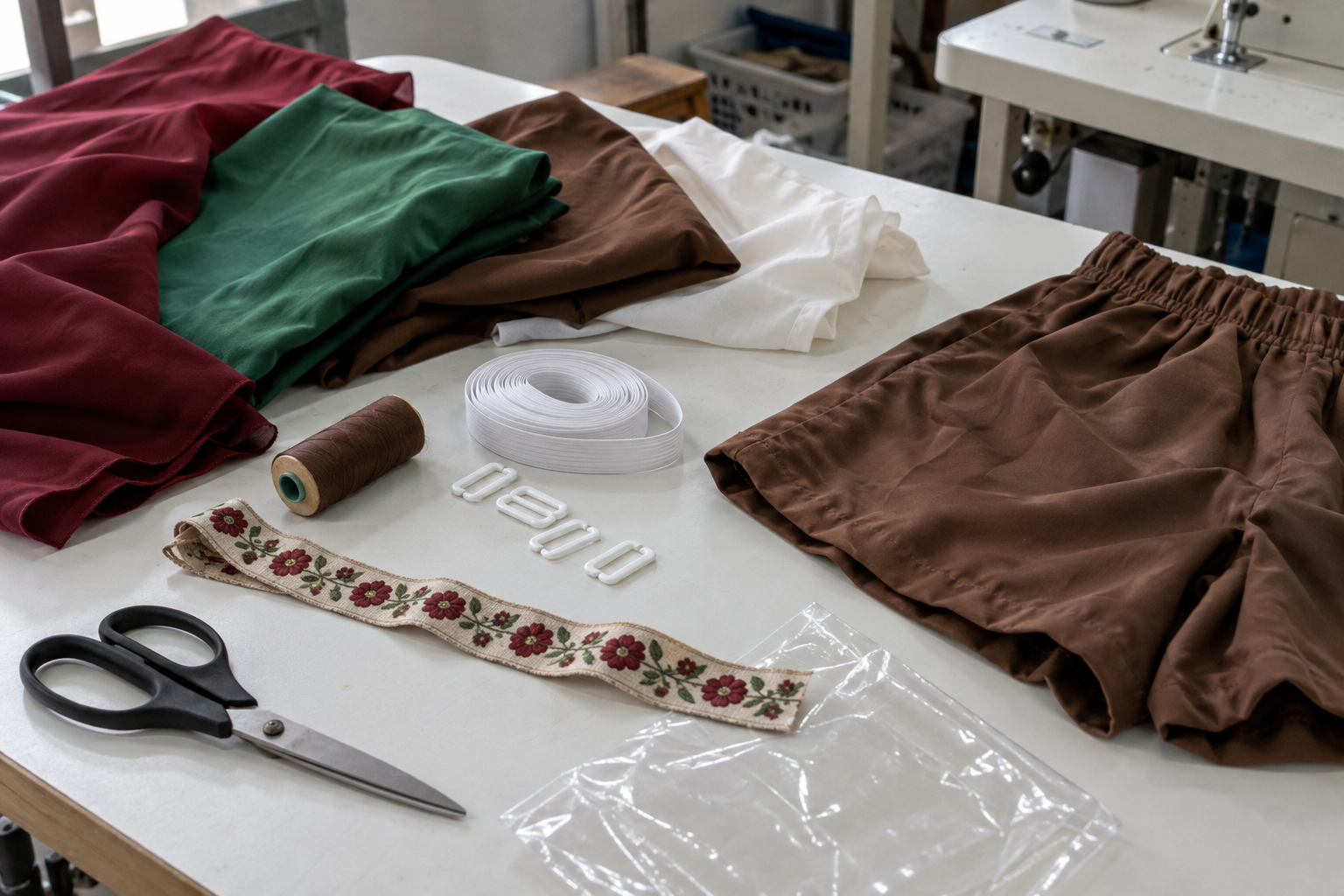
When two Oktoberfest costumes look similar but receive different quotations, one supplier is not necessarily charging more for the same item. The two quotes may cover materially different products.
| Cost Driver | What Can Change | Why the Quote Changes |
|---|---|---|
| Fabric | Fibre content, weight, hand feel, dyeing, printing, finishing and consumption | A photograph does not reveal the fabric specification or actual usage |
| Construction | Panels, contrast sections, lining, pockets, waistband, closures and binding | Added construction changes cutting time, sewing time and material loss |
| Decoration | Embroidery, print, trims, lace, buckles and custom motifs | Area, stitch count, colours, placement and attachment method affect production |
| Set contents | Shirt, apron, waistcoat, suspenders, hat and other accessories | "Set" may mean one main garment or several separately made components |
| Size allocation | Number of sizes and quantity in each size | More size groups require more grading, markers, cutting and order control |
| Packaging | Hangtags, care labels, barcodes, individual bags, set packing and carton instructions | Brand and importer requirements add materials and handling steps |
| Sample scope | Sample count, revision rounds, colour approvals and full-set review | Unresolved details can create extra sampling or late pre-production changes |
| Testing and documents | Requirements by SKU, age group and destination market | Different materials and product classifications may require different evidence |
Before comparing prices, align the bill of materials, fabric specification, decoration method, set contents, size allocation and packaging scope. Ask each supplier to identify what is confirmed and what remains provisional. If fabric or accessories are still being estimated from a photograph, the price is a working quote rather than a locked production price.
Turn the Concept into a Component Plan
Do not approve the visual concept and leave the component details until later. Break the product into parts that can be specified, sampled and signed off.
| Product or Component | Your Team Provides | The Supplier Confirms | Main Approval Risk |
|---|---|---|---|
| Dirndl-inspired costume | Design, colour direction and target sizing | Pattern, fabric, construction and sample | Bodice, blouse and apron do not work as one garment |
| Textile Lederhosen-style set | Visual direction and required set contents | Fabric, waist and hip construction, suspenders, buckles and decoration | Material description or trouser sizing is inaccurate |
| Shirt or waistcoat | Style and relationship to the main garment | Size, colour, fabric and fastening details | It follows a different size or colour standard from the costume |
| Hat or accessory | Size, shape, colour and packaging | Material, attachment method, colour matching and packing specification | It is approved separately and does not match the final set |
For a costume brand, this plan protects the product concept. For a wholesaler or importer, it reduces the number of handovers between garment, accessory and packaging suppliers. It also shows where components can share colours, trims or packaging-and where they need separate approval.
Total Volume Can Hide a Difficult Size Split
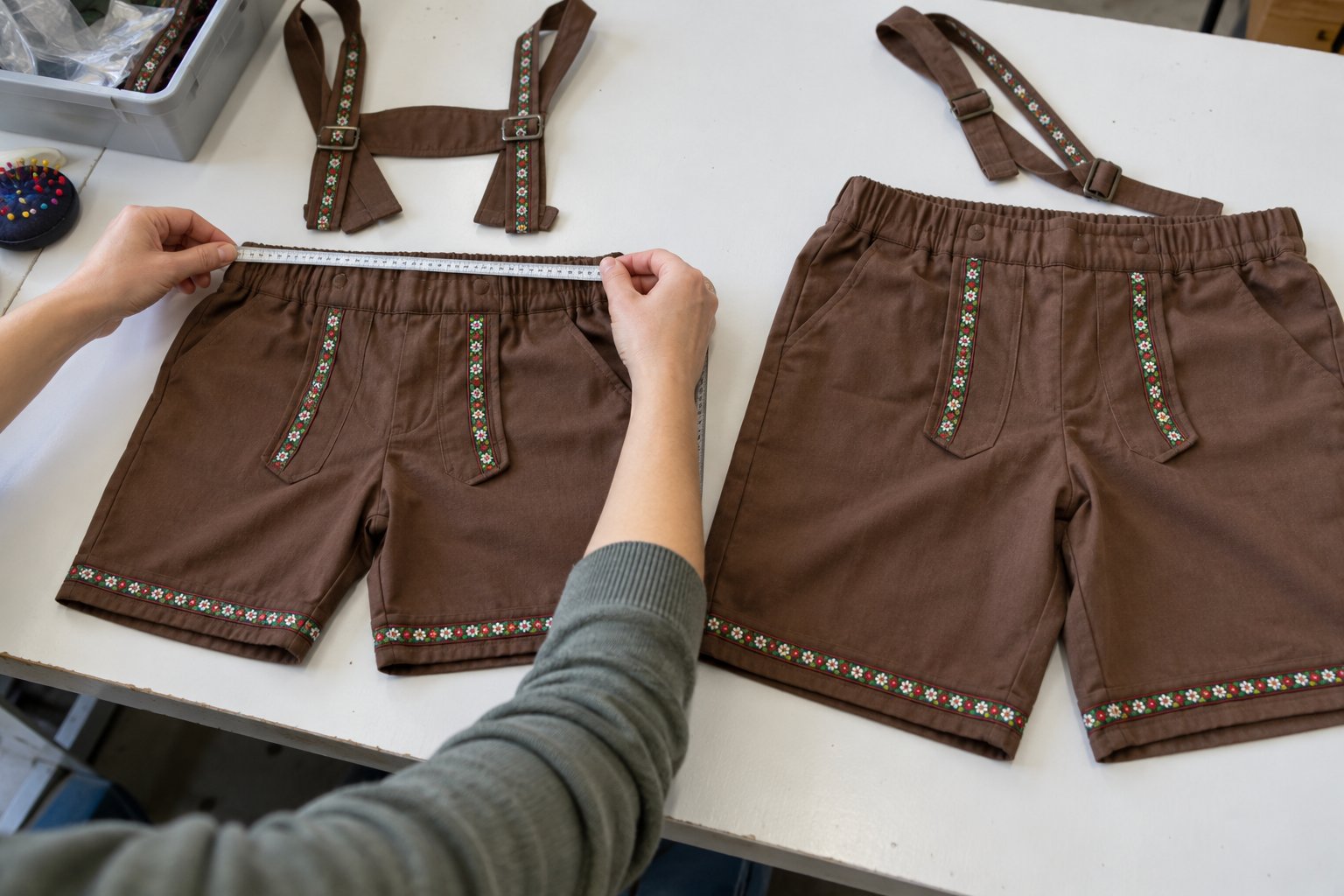
Factories do not produce a headline order quantity. They produce each style, colour and size within that total.
A style offered in three to six sizes needs patterns, grading, markers, cutting groups, identification and quantity control for every size. Add several colours or set components, and a high-volume programme can quickly become a collection of small production runs. A manufacturer may accept the total order but reject the quantity left in an individual size.
A Retail Programme with Small Size Splits
In one programme for a supermarket customer, the total purchasing volume was substantial, but each style covered three to six sizes. The smallest allocation for an individual size was just 50 pieces.
That combination is difficult for many manufacturers to schedule. Fcostume used its multi-line production setup and the flexibility developed through long-term customer programmes to support the finer size breakdown.
The case does not make 50 pieces a standard condition for every product. Fabric, colour, construction, packaging and the wider order mix still need to be reviewed. The useful question is not simply, "What is your MOQ?" It is, "How will you assess my quantity by style, colour and size?"
Show the supplier the complete size breakdown, including lower-volume sizes that your channel still needs. Also identify fabrics or components that can be shared across styles. This gives the manufacturer enough information to evaluate the real order-not just the attractive total at the top of the spreadsheet.
Approve the Set as One Product
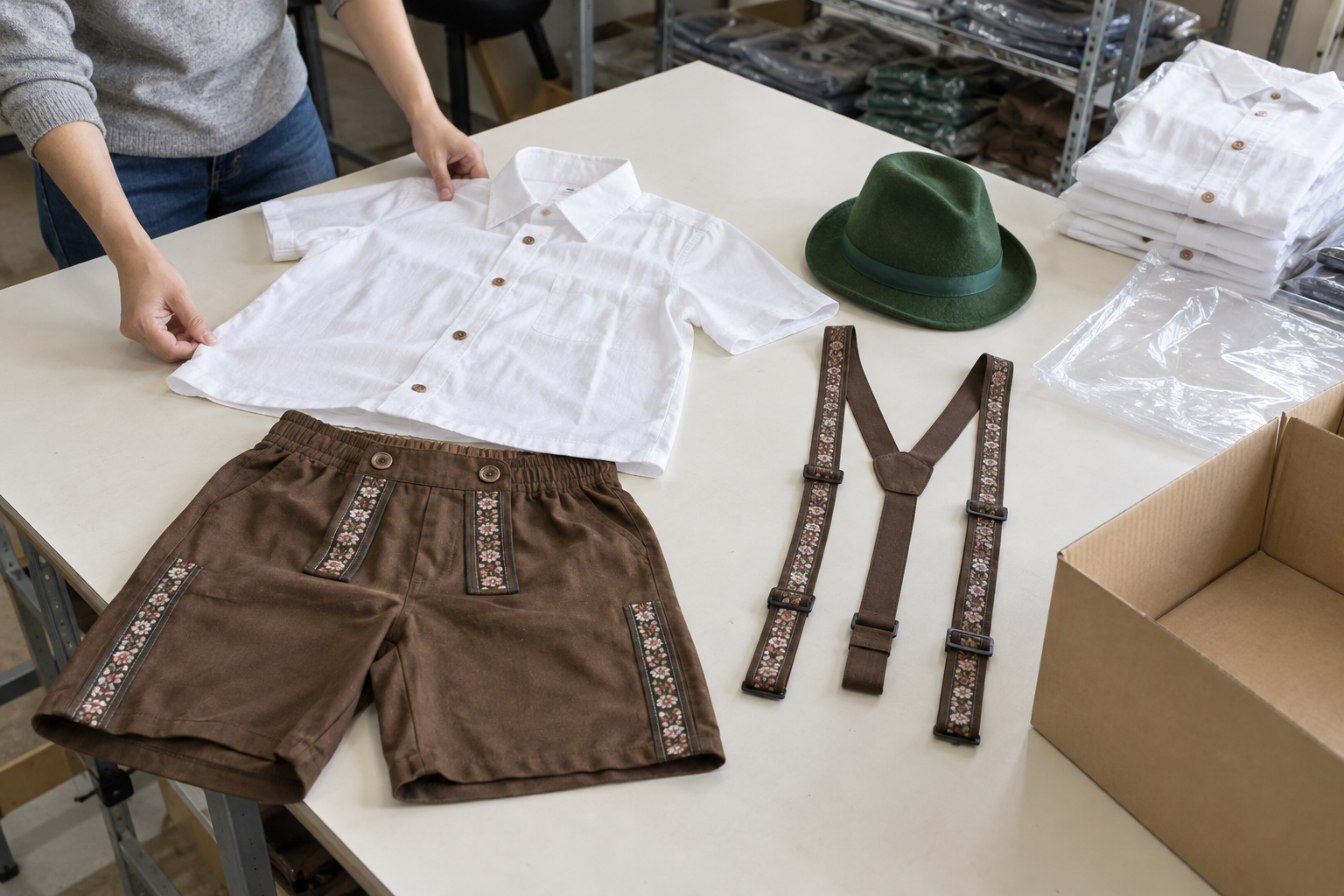
An Oktoberfest-style set should not be approved one component at a time without a final full-set check. A small change to the shirt, apron, suspenders or hat can alter the fit, presentation, packing method and cost of the product sold at retail.
Review the complete sample for:
- shell fabric, contrast panels, lining and decoration;
- critical measurements, closures and movement allowance;
- fit between the shirt, apron, waistcoat, suspenders and other components;
- embroidery, print, trims, buckles and attachment methods;
- hangtags, labels, barcodes, set contents and packaging;
- alignment between the approved sample and the final production specification.
Fcostume has found that multi-piece sets create more opportunities for version drift than single garments. The main costume may use the latest colour standard while an accessory still follows an earlier one. A garment measurement may change without the apron or suspenders being updated.
The practical fix is simple: give each component its own version number, measurement reference, material reference and approval status, then approve the complete set before production.
Evaluate More Than the Sample
A good-looking sample is only one part of the decision. Your team also needs to know whether the supplier can repeat it in bulk and manage the way your order is divided.
| Evaluation Area | Evidence to Request | Why It Matters |
|---|---|---|
| Custom production | Relevant construction samples and a clear sampling process | Shows how the supplier turns your design into a production specification |
| Quote clarity | Scope covering material, construction, components, sizing and packaging | Lets you compare like with like |
| Pattern and size control | Size chart, measurement method and grading approval | Reduces variation across a multi-size order |
| Production coordination | Quantity conditions by style, colour and size | Tests whether the factory can handle the actual order split |
| Component control | Set list, colour references and accessory specifications | Keeps garments and accessories on the same approval version |
| Sample control | Complete sample and revision record | Prevents open set issues from reaching production |
| Packaging coordination | Label, barcode, retail packing and carton confirmation | Prepares the product for your brand and import workflow |
| Documentation support | Information linked to the actual SKU and destination market | Avoids relying on an unrelated report or a generic claim |
No supplier can finalise an undefined product. A capable supplier should, however, tell you which open points affect construction, price, sampling and production. That is more useful than an early promise built on assumptions.
Keep Compliance in Proportion
Compliance should not take over the sourcing conversation, but it must enter the project before the product is finished.
Start with classification. Adult clothing, children’s clothing, children’s dress-up products, hats and accessories can follow different regulatory, testing and labelling routes in the US, UK and EU. Products that share one theme may still require different supporting information.
For a US programme, confirm the requirements that apply to clothing flammability, textile labelling and any children’s product obligations. In the UK and EU, establish whether a children’s dress-up product falls under toy rules or another product category before confirming flammability, mechanical hazards, cords, small parts, markings and documentation. EU toy requirements are also in a regulatory transition, so long-term programmes should check the rules and dates in force when products are placed on the market.
Give the supplier the destination country, intended age group, use case, materials, set components and required documents. Do not carry a report from one fabric or previous SKU over to a different material, age group or accessory combination without checking its scope. Use claims such as "safe," "non-toxic," "compliant" or "certified" only when the documentation supports the exact claim.
Intellectual property belongs in the same early review. The City of Munich maintains trademark and licensing arrangements for "Oktoberfest," related terms and official brand assets. Editorial use of an event name is different from placing a protected term, logo or official artwork on a product or its packaging. Confirm the intended use and relevant rights for each market before production, and never imply official status without authorisation.
Send a Brief That Can Be Quoted
"Please quote the costume in this image" is not a complete sourcing brief. Give the supplier enough information to price and sample the product your team actually intends to buy:
- destination market, sales channel and required delivery date;
- tech pack, design files, reference sample or clear custom instructions;
- shell fabric, contrast material, lining, decoration and buckle requirements;
- quantity by style, colour and size;
- set contents, including shirts, aprons, suspenders, hats and accessories;
- hangtag, care label, barcode, retail packaging and carton requirements;
- status of trademarks, artwork and design rights;
- intended age group and required testing or documentation.
With those inputs, your team can compare how suppliers understand the same project instead of comparing prices built on different assumptions.
Fcostume specialises in translating buyer-led costume concepts into production-ready textile garments and coordinated sets. Send Fcostume your design direction, quantity and size breakdown, component list, packaging needs and target market to discuss the sample scope and quotation conditions for your Oktoberfest-style costume programme.