
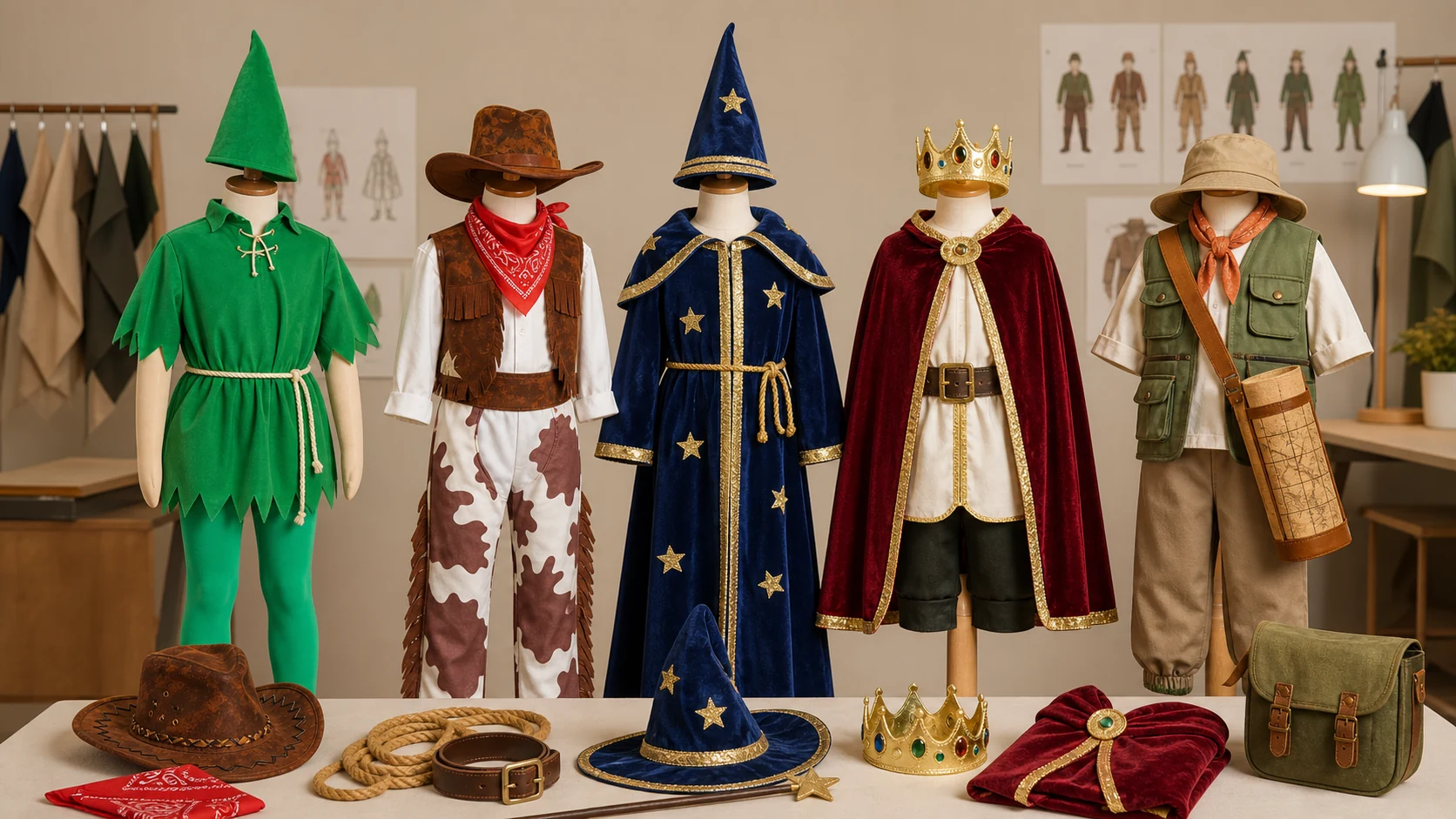
If you are buying Book Week costumes for a retail or wholesale range, the first question should not be:
Which 20 character concepts should your team develop?
The first question should be:
What commercial job should each SKU perform?
Some products create the visual story. Some provide an easier entry point. Some increase the value of a costume order through accessories. Others serve teachers, schools, libraries, or group events. Products with fewer size variables may also give you more options if demand is lower than forecast.
This matters because Book Week is not one global costume event. The UK, United States, and Australia have different calendars, organisers, participation models, and buying risks.
Before choosing designs, define the market, buying problem, range structure, and supplier requirements.
Start with the Buying Decision
Before you select products, answer five buying questions:
- Which country, event, and sales channel are you targeting?
- Is demand concentrated around one event or fragmented across local programmes?
- How should complete costumes, simplified sets, and accessories work together?
- Which designs need licensing, and which can be developed as general or original themes?
- Can one supplier coordinate costumes, headwear, accessories, packaging, and approval documents?
If these questions are left until after the designs are selected, the result is often a collection of unrelated products rather than a manageable seasonal range.
Do not select a long list of characters and then work out how to buy them. First decide which SKUs will attract traffic, support an entry price, generate add-on sales, serve group orders, or reduce inventory exposure.
Three Markets, Three Buying Problems
| Market | Main Event Route | Typical Window | Buying Opportunity | Main Risk | Recommended Starting Point |
|---|---|---|---|---|---|
| UK | World Book Day | Early March | A concentrated and widely recognised school occasion | Depending too heavily on fitted, higher-priced complete costumes | Build full costumes, simplified sets, and accessories as one range |
| US | Children’s Book Week, Read Across America, and local school events | March, May, November, and locally selected dates | Multiple school, library, bookstore, and community programmes | Treating local activity as nationwide demand | Validate the event and channel before building deep size inventory |
| Australia | CBCA Children’s Book Week | August | A clear second seasonal window after the UK | Copying the UK plan without checking local timing, seasons, and permissions | Reuse selected product logic while planning the market separately |
UK: Concentrated, but Not Compulsory
World Book Day creates a recognisable early-March opportunity across UK schools, early-years settings, families, libraries, and booksellers.
Costumes are highly visible, but sellers should not describe participation as compulsory. World Book Day guidance says dressing up should be affordable, inclusive, and optional. Schools may use complete costumes, simple props, classroom-made items, pyjamas, or activities that do not require dressing up.
For buyers, the conclusion is clear: the UK can support a deeper range, but complete costumes should not be the only product level.
US: Demand Exists, but It Is Fragmented
The United States does not have one costume-focused Book Week followed uniformly by every school.
Buyers need to distinguish among Children’s Book Week, Read Across America, and locally organised literacy weeks, book parades, spirit weeks, or storybook character days.
Costume parades appear in official Children’s Book Week activity suggestions, but they are one option among story times, reading challenges, crafts, bookstore programmes, and community events. Read Across America also operates throughout the year rather than as one national costume-purchasing deadline.
The US opportunity should therefore be validated by event, district, retailer, or channel. A successful parade video from one school is not enough evidence for nationwide inventory.
Australia: A Clear August Window with Separate Rules
The Children’s Book Council of Australia organises Children’s Book Week during August. Schools, libraries, and communities may organise displays, reading activities, group events, and costume parades around the annual programme.
This gives sellers another seasonal window after the UK market. However, the Australian range still requires separate decisions about season, sizing, school timing, shipping, and customer requirements.
The CBCA also states that its annual artwork and images cannot be used for commercial promotion without permission. An annual theme can inform market research, but it does not provide a licence to reproduce official characters, artwork, or logos on products or packaging.
Give Every Product a Commercial Role
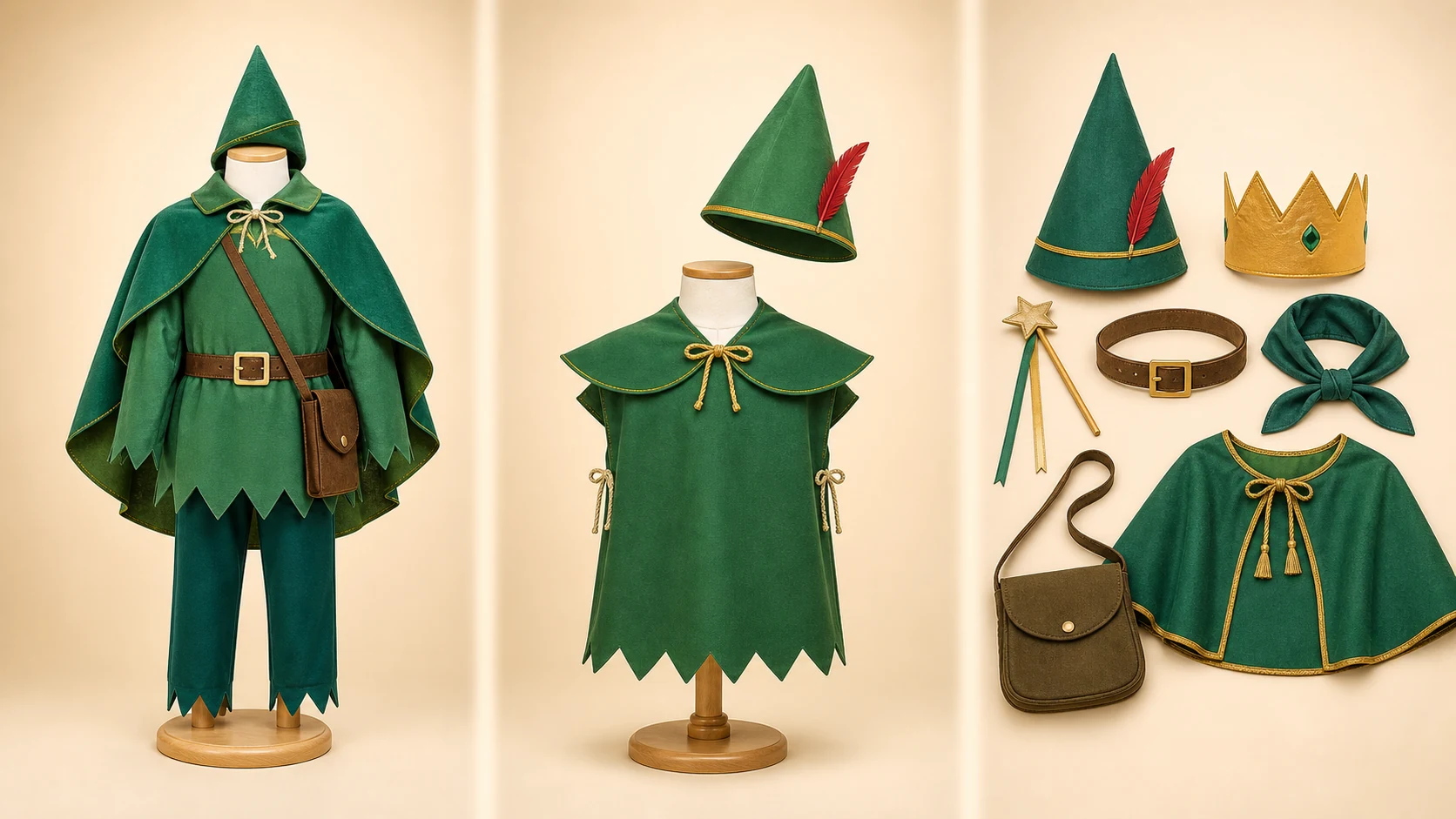
A useful range does not give every SKU the same job.
| Product Type | Main Role | Sizing Complexity | Cross-Market Reuse | Suitable Buyer |
|---|---|---|---|---|
| Complete costume | Hero or traffic SKU | High | Medium | Costume brands and specialist retailers |
| Cape or headwear set | Entry SKU | Low | High | Wholesalers and general party retailers |
| Character accessory set | Cross-selling SKU | Very low | Very high | Retail and ecommerce sellers |
| Individual hat, crown, wings, ears, or tail | Add-on or replacement SKU | Very low | Very high | Marketplaces and party shops |
| Adult or teacher costume | Group and event SKU | Medium | High | School, library, and event suppliers |
| Classroom activity pack | Institutional-order SKU | Low | High | Educational distributors |
Use this table before final quantities are allocated.
It forces practical decisions:
- Which products will lead the campaign?
- Which products can be sold without managing several children’s sizes?
- Which accessories should be linked to each complete costume?
- Which products can serve schools or group orders?
- Which SKUs can move into Halloween, school plays, story parties, or general dress-up ranges if demand changes?
“Cross-market reuse” is a product-planning objective, not a guarantee of sell-through.
Example of a Connected Assortment
The following is an illustrative development framework, not a universal sales formula.
| Core Theme | Complete Costume | Simplified Set | Add-On Products |
|---|---|---|---|
| Fantasy storyteller | Robe, cape, belt, and headwear | Short cape and hat | Wand, glasses, belt, or satchel |
| Woodland adventure | Tunic, trousers, hat, and belt | Tabard and headwear | Ears, leaf cape, belt, or small bag |
| Animal story | Jumpsuit or dress with hood | Cape and headband | Ears, tail, mask, or paw accessories |
| Historical adventure | Coat, shirt front, trousers, and hat | Vest and hat | Scarf, belt, glasses, or map bag |
Each complete costume should connect to a simplified version and relevant accessories. This creates more selling combinations without requiring a separate garment construction for every SKU.
From the supplier side, connected ranges are also easier to review than a folder of unrelated character images. A product matrix makes it possible to compare shared fabrics, hat bases, cape constructions, trims, colours, packaging formats, and accessory relationships before sampling begins.
Buyer Case: From a Six-Style Trial to a 20+ Style Programme
One ongoing UK wholesale customer, referred to here as Tom, began working with Fcostume with an initial order covering six costume styles and approximately 3,000 pieces.
The customer did not start by ordering a large catalogue. The first range was kept relatively focused, allowing the parties to establish the working process and review how the styles, sizes, and order coordination performed.
Over consecutive years of cooperation, the programme expanded to more than 20 styles and annual purchasing of over 15,000 pieces.
The product mix also developed beyond basic costumes. It now includes accessories, headwear, and coordinated costume sets. Orders can combine different product types instead of treating every garment and accessory as an isolated purchase.
This example does not mean every small initial order will produce the same growth. It shows how a wholesale programme can expand after both sides establish a repeatable development, approval, and range-coordination process.
What Can Your Team Take from This?
First, seasonal demand is easier to manage as a range than as one hero SKU.
Second, accessories and simplified formats can extend a programme after the core costume business has been established.
Third, a smaller starting order can be used to test working methods and product structure before the range becomes broader.
Finally, the purchasing calendar matters as much as the design. Long-term seasonal cooperation depends on repeating the development, confirmation, production, and delivery cycle—not simply adding more character ideas each year.
Match the Product Plan to the Market
UK: Build a Full Product Ladder
The UK can support a structured seasonal range because World Book Day has a concentrated and widely recognised window.
Use complete costumes as catalogue anchors, then add:
- Cape-and-hat sets;
- Tabards with simpler size coverage;
- Headbands, masks, glasses, wigs, and crowns;
- Adult teacher costumes;
- Group or classroom accessory packs.
Product pages should clearly show set contents, size information, and how simplified products can work with clothes already owned. Avoid language suggesting that every school requires a purchased costume.
US: Identify the Occasion Before Building Inventory
Before approving a US range, ask:
- Which reading event is the customer targeting?
- Is the opportunity linked to particular schools, districts, libraries, or retailers?
- Is the activity costume-led, book-led, or classroom-led?
- Does the channel have previous search, enquiry, preorder, or sales information?
If these answers are unclear, begin with reusable accessories, simplified sets, teacher products, and a controlled number of complete costumes.
Use the event name recognised by the target customer. Children’s Book Week, Read Across America, and a local storybook day should not be treated as interchangeable search terms.
Australia: Reuse Components, Not the Entire UK Order Plan
General fantasy, animal, adventure, profession, and teacher-group themes may provide a reusable base for Australia.
However, review local seasons, sizes, school calendars, transport deadlines, and commercial-use permissions separately. Selected UK-developed constructions or accessories may be adapted, but remaining UK stock should not automatically become the Australian plan.
Use Supply-Chain Coordination as a Buying Advantage
A Book Week programme may involve:
- Costumes;
- Hats and headwear;
- Wigs, masks, capes, wings, ears, and tails;
- Belts, glasses, bags, and lightweight props;
- Size labels and hangtags;
- Individual and set packaging;
- Product and packaging artwork;
- Test reports and technical documents.
When these elements are bought separately, your team must manage colour matching, component compatibility, packaging dimensions, delivery dates, and final set assembly across several suppliers.
The value of coordinated sourcing is not the phrase “one-stop solution.” It is the ability to keep one theme consistent across complete costumes, simplified sets, accessories, and packaging while reducing supplier handovers.
A supplier does not need to produce every component in the same workshop. The important point is whether one party takes responsibility for coordinating the complete product and maintaining the approved specification.
A Supplier’s First-Hand View
From the Fcostume supplier perspective, the most productive enquiries do not begin with dozens of reference images and a request for a total price.
They begin with the target market, intended arrival date, product roles, size structure, expected quantities, licensing status, and packaging requirements.
This information lets the supplier identify where constructions can be shared, where accessories require separate sourcing, which products need their own compliance review, and which parts of the range should be sampled first.
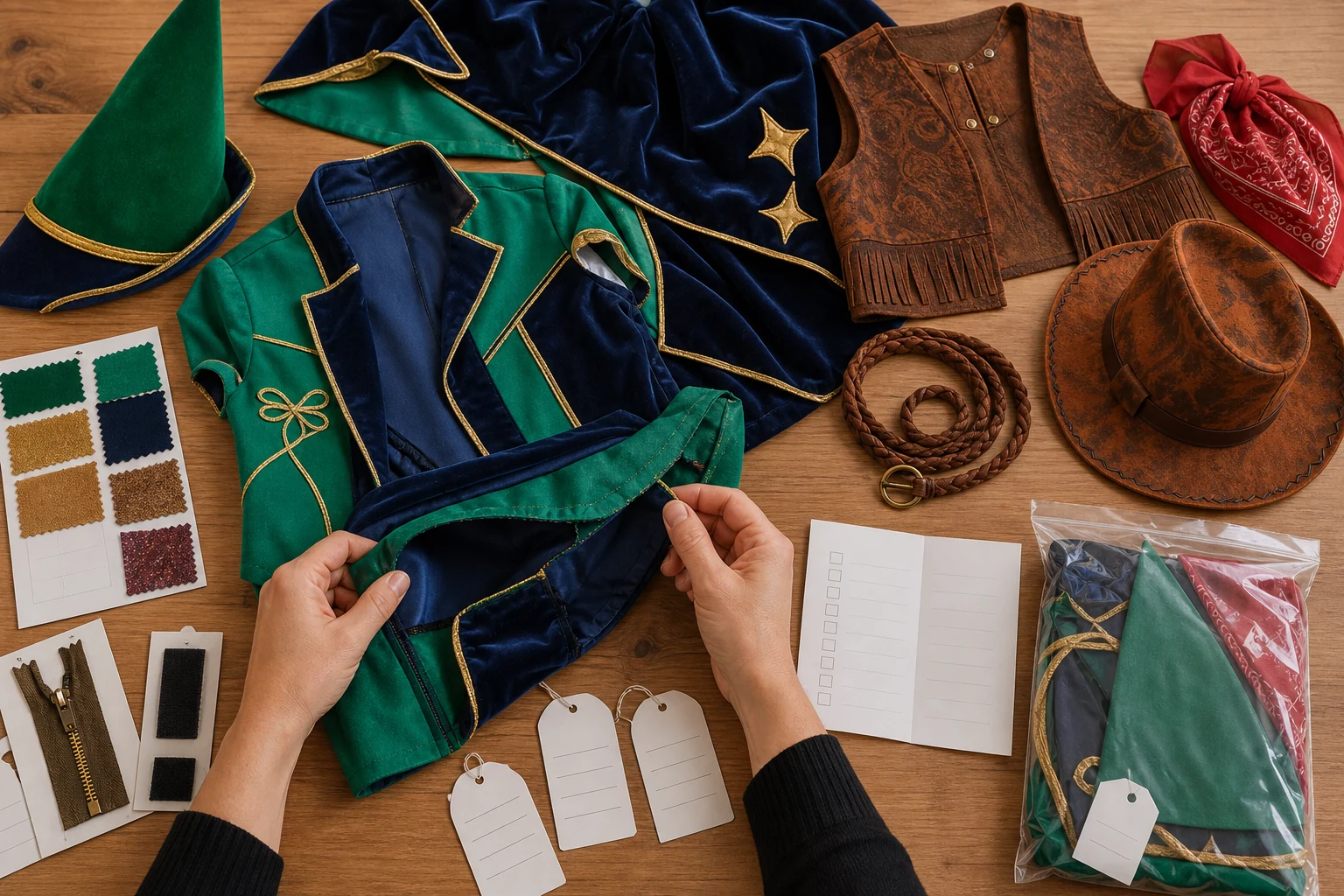
At Fcostume, we also see avoidable problems when the main garment is approved before your team confirms the hat, belt, cape, packaging, or final set list. For a costume programme, the sample should be reviewed as a complete retail product.
Book Week Product Development Workflow
Step 1: Define the Market and Channel
Confirm the country, event, customer type, sales channel, target arrival date, and expected quantity range.
Step 2: Assign SKU Roles
Mark each proposal as a traffic, entry, cross-selling, group, or inventory-control SKU. Remove unnecessary duplication before sampling.
Step 3: Confirm the IP Route
Classify each design as licensed, general-character, or original. For licensed products, confirm the authorised market, category, channel, period, and marketing use.
Step 4: Build the Range Matrix
Connect every complete costume to its sizes, simplified version, accessories, packaging, and target market.
Step 5: Review Shared Components
Identify suitable shared fabrics, trims, fasteners, cape constructions, hat bases, and packaging sizes without weakening fit or character recognition.
Step 6: Approve Complete Samples
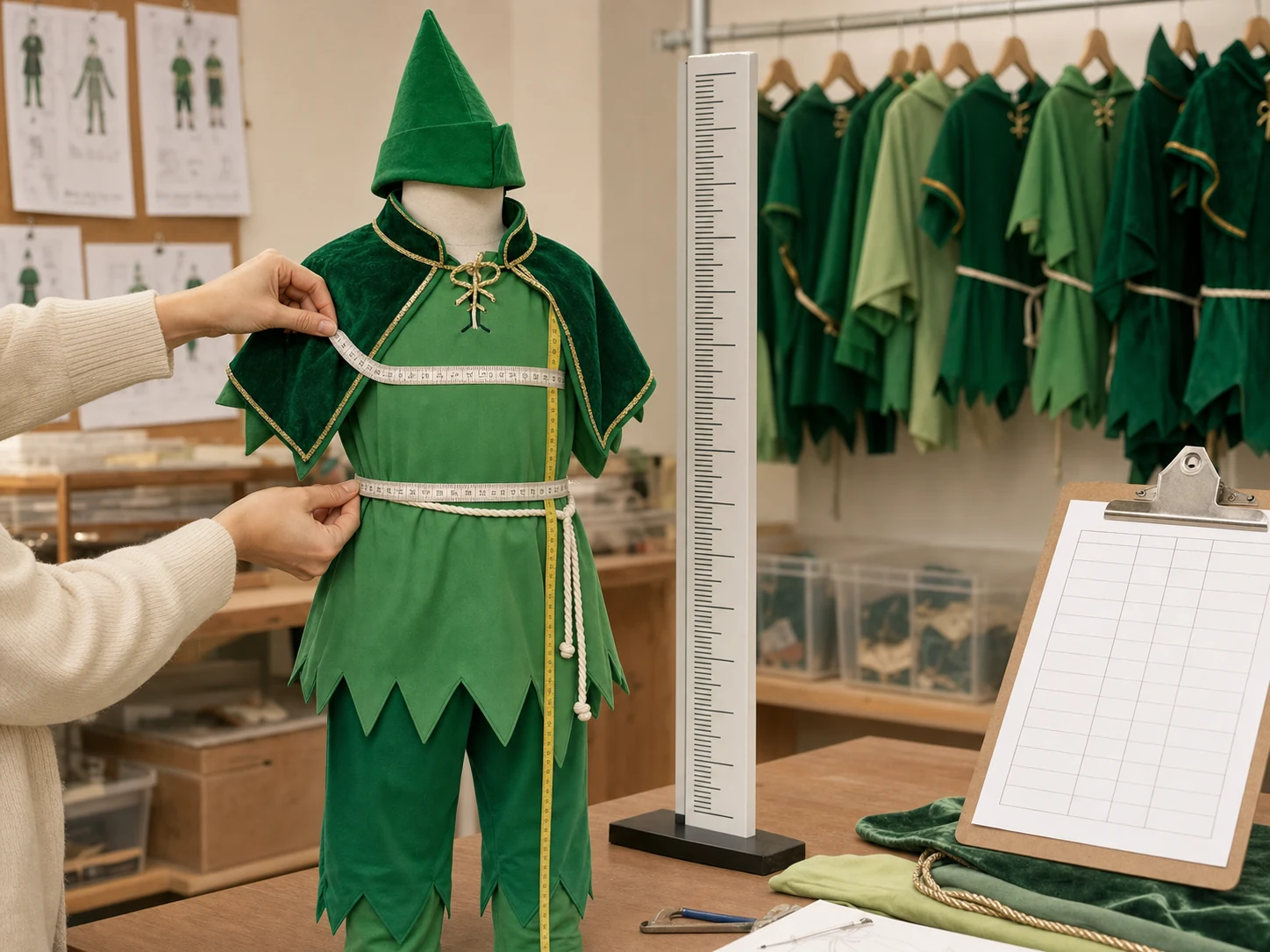
Review measurements, grading, movement, visibility, seams, attachments, decoration placement, accessories, labels, and packaging together.
Step 7: Confirm Classification and Documents
Check the requirements for each garment, dress-up item, toy-like accessory, or decoration. Do not use one general compliance statement for the entire range.
Step 8: Finalise the Order Matrix
Confirm quantities by SKU and size, set contents, packaging, IP status, required documents, and the approved production specification.
How to Evaluate a Supplier
| Supplier Capability | Why It Matters |
|---|---|
| Costume OEM and ODM | Converts a theme or product brief into manufacturable styles |
| Accessory coordination | Connects hats, capes, wigs, belts, wings, and props to the costume |
| Size development | Separates age labels, body references, and garment measurements |
| Shared component planning | Supports consistency and avoids unnecessary development duplication |
| Complete-sample approval | Allows the garment, accessories, labels, and packaging to be reviewed together |
| Packaging coordination | Reduces errors in set contents and product presentation |
| Documentation support | Helps organise product-specific test and compliance information |
| Supply-chain responsibility | Reduces separate component suppliers and handovers |
Do not evaluate a supplier only by the appearance of one sample. Ask whether the supplier can coordinate the entire programme.
IP Risk: Activity Use Is Not Merchandise Permission
A school may use a book or character during an educational activity. That does not automatically allow a manufacturer or retailer to reproduce that character on a costume, package, listing, or advertisement.
Before development, confirm:
- Character and series trademarks;
- Copyright in the visual design and distinctive costume elements;
- Rights added by film, television, animation, or stage adaptations;
- The licence territory, product category, channel, sales period, and marketing rights.
The U.S. Copyright Office distinguishes a general character concept from a specific literary or visual expression. Names and source-identifying elements may also involve trademark rights.
World Book Day and CBCA materials have their own commercial-use restrictions. Educational resources should not be copied into commercial products without permission.
What to Include in an OEM or ODM Enquiry
Send your supplier:
- Target country and sales channel;
- Event and required arrival date;
- Character or theme direction;
- Licensing status;
- Complete costume and accessory plan;
- Size range;
- Expected quantities by style and size;
- Fabric, colour, print, embroidery, and trim requirements;
- Packaging and hangtag requirements;
- Required reports or compliance documents;
- Sample approval process.
If the range is still at an early stage, begin with the intended role of each SKU. The supplier can then discuss whether the programme should start with complete costumes, simplified sets, accessories, or a coordinated combination.
Final Buying Decision
Book Week should not be managed as one global trend.
For the UK, build a complete product ladder around a concentrated World Book Day window.
For the US, identify the actual event, district, retailer, library, or sales channel before placing deep orders.
For Australia, use the August opportunity but plan the season, sizes, timing, and official-material permissions separately.
Most importantly, build the range around commercial functions rather than character count:
- Which SKU creates the visual story?
- Which gives customers an easier entry point?
- Which accessory increases the value of the main costume?
- Which product serves teachers or group events?
- Which SKU retains another selling route if demand changes?
If you are planning a Book Week range, send Fcostume your target market, event window, expected quantity, size structure, product mix, packaging requirements, and licensing status. Fcostume can use this information to discuss an OEM or ODM development plan covering costumes and coordinated accessories.


